
LOOK UP CAMPAIGN · HISTORIC BUTTE EDITION · UNIQUE LIGHTING & HOME DECOR
Historic Building Lighting, Architectural Character, and Thoughtful Restoration in Butte, Montana
Walk through Historic Uptown Butte and take a moment to look above the storefront windows.
Look at the brickwork. The cornices. The decorative details. The proportions of buildings that have stood through generations of change.
Step inside an older storefront, historic home, or commercial building, and you may discover even more.
Pressed-tin ceilings. Exposed structural elements. Decorative woodwork. Original masonry. Tall windows. Architectural features that tell stories about the people who built, occupied, and cared for these spaces.
Butte is a city where history isn’t confined to museums.
It’s part of the built environment.
And when we’re preserving, restoring, or adapting these buildings for modern use, there’s one element that deserves more attention than it sometimes receives.
The lighting.
A beautiful historic ceiling deserves more than a fixture chosen simply because it fits the electrical box.
A carefully restored entrance deserves lighting that complements its architecture.
And a building with more than a century of history deserves thoughtful decisions about what hangs overhead.
That’s why Unique Lighting & Home Decor is bringing our LOOK UP campaign into the heart of Historic Butte.
Because preserving architectural character isn’t only about what we save.
It’s also about what we choose to add.
Butte’s Architecture Tells the Story of the City

Butte’s historic architecture is inseparable from its mining history.
The city’s growth during the late nineteenth and early twentieth centuries brought commercial investment, residential development, and construction that reflected its importance as a major mining center.
Today, Uptown Butte contains an extraordinary collection of buildings representing different periods, functions, and architectural influences.
From substantial commercial blocks and civic buildings to neighborhood residences and former industrial properties, the built environment reflects generations of economic activity and community life.
The National Park Service recognizes Butte’s historic significance through the Butte–Anaconda National Historic Landmark District, whose history is closely tied to copper mining, industrial development, and the communities that supported those industries (National Park Service [NPS], n.d.).
These buildings aren’t all alike.
Some have elaborate decorative details.
Others are comparatively restrained and utilitarian.
Some were designed to make a strong public impression.
Others were built primarily for work, commerce, or everyday living.
That variety is part of Butte’s architectural character.
And lighting should respond to the building you’re working with, not to a generic idea of what an old building ought to look like.
Historic Restoration Is About Respecting What Was Already There

There’s an important difference between restoring a historic building and simply making an older building look new.
A thoughtful restoration begins by understanding the building’s character.
What materials were originally used?
Which architectural features remain?
What has changed over time?
Which details are historically significant?
What makes the building recognizable?
The National Park Service’s Secretary of the Interior’s Standards for the Treatment of Historic Properties provides a framework for preserving historic materials and character-defining features while accommodating appropriate uses and improvements (NPS, 2017).
That approach has important implications for lighting.
A new fixture shouldn’t automatically compete with original architectural details.
A decorative chandelier shouldn’t overwhelm a carefully restored ceiling.
A wall sconce shouldn’t require unnecessary damage to significant historic woodwork or masonry.
And a modern lighting installation should be planned with an understanding of the building’s materials, proportions, and architectural features.
The goal isn’t necessarily to recreate every fixture exactly as it appeared a century ago.
The goal is to make choices that respect the historic environment.
The Right Lighting Can Complement Historic Architecture

Imagine walking into a restored Uptown Butte storefront.
The original brick walls have been exposed.
A pressed-tin ceiling has been carefully preserved.
Tall windows bring daylight into the space.
The room has character before a single piece of furniture is installed.
Now imagine two very different lighting approaches.
One uses generic fixtures selected with little consideration for the architecture.
The other uses thoughtfully proportioned pendants with finishes, shapes, and materials that complement the room.
Both approaches may provide adequate illumination.
But they can create very different visual experiences.
Lighting is part of the architectural composition, not merely something attached to it.
That doesn’t mean every historic building needs ornate fixtures.
In some spaces, simple and restrained lighting may be the better choice.
In others, decorative lighting can reinforce the richness of the original design.
What matters is understanding the building before choosing the fixture.
Vintage-Inspired Pendants for Historic Storefronts

Historic commercial buildings often present wonderful opportunities for pendant lighting.
A pendant can help establish a visual relationship between a tall ceiling and the occupied space below.
It can illuminate counters, tables, work areas, or gathering spaces while contributing to the overall design.
Depending on the building, suitable styles might include:
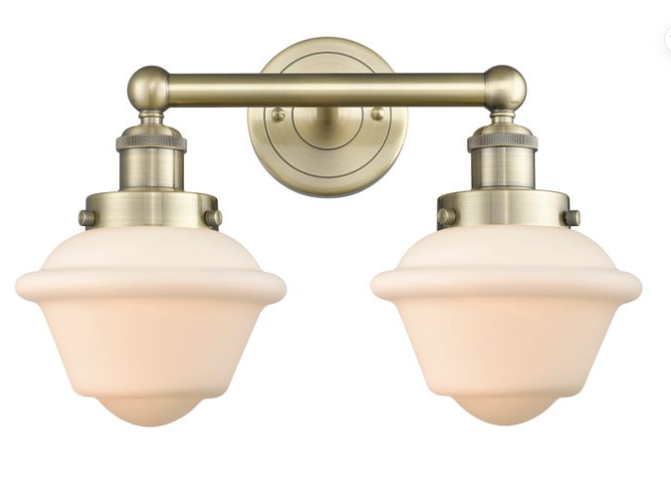
- Vintage-inspired schoolhouse pendants
- Traditional metal-shade fixtures
- Decorative glass pendants
- Industrial-inspired lighting
- Simple period-influenced suspended fixtures
- Larger statement pendants for high-ceiling spaces
But choosing a vintage-inspired fixture isn’t the same as selecting a historically accurate reproduction.
If a project requires documented period accuracy, the selection should be informed by the building’s history, photographs, surviving fixtures, or other reliable evidence.
For many adaptive-reuse projects, the objective may instead be visual compatibility: choosing a fixture that feels appropriate without pretending to be an original artifact.
Both approaches can be valid, depending on the building and project goals.
Pay Attention to the Ceiling
In a building with pressed-tin ceilings or other significant overhead details, fixture placement deserves particular care.
Mounting points, electrical pathways, suspension lengths, and installation methods should be evaluated before the fixture is ordered.
The ceiling may be one of the building’s most valuable architectural features.
Preserving it should be part of the lighting plan from the beginning.
Copper and Aged-Metal Lighting: A Connection to Butte’s Heritage

Few materials are as closely associated with Butte’s identity as copper.
The city’s mining history makes copper a particularly meaningful material reference in local design.
That connection can inspire lighting selections featuring:
- Copper finishes
- Aged brass
- Antique bronze
- Patinated metal appearances
- Warm-toned metal shades
- Traditional industrial forms
But the relationship between copper and Butte’s history doesn’t mean copper-colored lighting belongs in every historic building.
A richly detailed commercial interior may call for a different finish than a modest early-twentieth-century residence.
An industrial space may benefit from a simpler material palette.
And an ornate fixture might feel out of place in a building whose character comes from straightforward, utilitarian construction.
Use Butte’s heritage as inspiration, not as a requirement to make every fixture look like mining equipment.
The best lighting choices respect both the city’s history and the specific architecture of the property.
Traditional Lanterns for Historic Entrances

The entrance to a historic building is often one of its most recognizable features.
Door surrounds, masonry details, transom windows, decorative trim, and original hardware may all contribute to its character.
Exterior lighting should be considered alongside those elements.
Traditional lanterns can be particularly effective when their proportions and design relate to the building.
But selecting the right lantern involves more than choosing a historical-looking shape.
Consider:
- The scale of the doorway and surrounding architecture
- Whether one fixture or a symmetrical pair is appropriate
- Fixture projection from the wall
- Mounting height and available clearance
- Finish and material compatibility
- Light distribution and glare
- Weather exposure and product ratings
- Existing masonry and mounting conditions
For historic masonry, installation planning is especially important.
The National Park Service’s preservation guidance emphasizes the protection of historic materials and the careful treatment of character-defining features (NPS, 2017).
That means fixture mounting and wiring shouldn’t be treated as afterthoughts.
A beautiful lantern isn’t a successful preservation choice if installing it unnecessarily damages significant original materials.
Ornate Chandeliers and Stained-Glass Lighting

Some historic interiors invite more decorative lighting.
Imagine a formal entry, an elegant dining room, a historic meeting space, or a commercial interior with elaborate architectural finishes.
A chandelier may contribute to the visual richness of the room.
Depending on the building, possible approaches include:
- Traditional multi-arm chandeliers
- Decorative metalwork
- Period-inspired glass shades
- Stained-glass or art-glass lighting
- Ornate suspended fixtures
- Classic designs with restrained detailing
These fixtures can become important visual features, particularly where ceiling height and room proportions support them.
But decorative richness needs to be balanced against the architecture.
A chandelier that’s too small may disappear in a tall room.
One that’s too large may dominate original ceiling details.
And a fixture whose style has little relationship to the building may feel more like a theatrical prop than a thoughtful architectural addition.
The goal isn’t to make every historic interior elaborate.
It’s to understand when decorative lighting contributes to the space—and when restraint would be more appropriate.
Decorative Ceiling Fans in Older Buildings

Historic buildings still need to function for the people who occupy them today.
Comfort, ventilation, and modern expectations matter.
A ceiling fan may be a practical addition to some older homes, commercial spaces, or gathering areas.
But a fan also occupies a highly visible position.
Its blade design, motor housing, finish, proportions, and lighting components can influence the appearance of the room.
For a historically sensitive interior, consider whether a fan’s design complements the architecture.
Also consider the technical requirements.
Ceiling fans need appropriate support and installation clearances. A standard lighting outlet box is not necessarily suitable for supporting a fan.
In buildings with significant historic ceilings, structural and electrical planning should happen before a fixture is selected.
And not every historic room is an appropriate location for a ceiling fan.
Sometimes a less visually prominent solution may better protect the building’s character.
Historic Character Doesn’t Require Outdated Lighting Performance

One of the opportunities in historic restoration is combining appropriate visual design with modern lighting technology.
A fixture can have a traditional appearance while using modern light sources.
That can allow owners to preserve or complement a historic aesthetic without relying on obsolete lighting technology.
The U.S. Department of Energy explains that LED lighting offers advantages in energy efficiency and service life compared with traditional incandescent technologies (U.S. Department of Energy [DOE], n.d.).
For older properties, modern lighting options may offer benefits such as:
- Lower electricity consumption with appropriately selected LEDs
- Longer intervals between lamp replacements
- A range of available color temperatures
- Improved control options
- Dimming where compatible
- Different beam distributions for specific applications
However, product compatibility matters.
Not every LED lamp works properly with every existing fixture or dimmer.
Enclosed fixtures, temperature conditions, and electrical characteristics can affect product selection.
Historic lighting also presents visual considerations.
A very cool-looking light source may create an atmosphere that’s inconsistent with the intended character of a warm, traditional interior.
An exposed LED lamp with an inappropriate appearance may undermine an otherwise carefully selected period-inspired fixture.
The technology should support the architectural experience—not distract from it.
Lighting Historic Brick, Tin Ceilings, and Decorative Woodwork
Not every lighting improvement requires a decorative fixture to become the center of attention.
Sometimes the most effective lighting helps people notice the architecture itself.
Consider a historic interior with beautiful masonry.
Thoughtfully directed light may reveal the texture and depth of the brickwork.
A pressed-tin ceiling may benefit from lighting that allows its patterns and relief to be appreciated.
Decorative woodwork may become more visually prominent when appropriately illuminated.
These approaches fall within the broader practice of architectural and accent lighting.
The Illuminating Engineering Society distinguishes among lighting applications based on their visual purpose, including illumination intended to emphasize particular objects or architectural features (Illuminating Engineering Society [IES], n.d.).
For a historic property, the objective may be to make the building’s existing craftsmanship more visible.
Possible approaches include:
- Carefully aimed accent lighting
- Wall-mounted fixtures selected for architectural compatibility
- Concealed or visually restrained lighting where appropriate
- Decorative pendants that complement the ceiling
- Layered illumination for both function and atmosphere
Each approach requires consideration of the building’s actual conditions.
Historic materials can be fragile, and new lighting installations should avoid unnecessary damage.
Sometimes the best lighting design is the one that lets the architecture remain the star.
Restoring a Historic Building? Start With the Lighting Plan Early.
Lighting decisions can become much more complicated when they’re postponed until construction or restoration work is nearly finished.
In an older building, electrical pathways may be difficult to change without affecting historic materials.
Mounting conditions may be unusual.
Ceiling heights may require special fixture dimensions or suspension lengths.
Original architectural details may restrict where equipment can be installed.
And the intended use of the building may require lighting that differs significantly from its original purpose.
For those reasons, lighting should be considered early in the planning process.
That doesn’t mean every fixture must be purchased before restoration begins.
It means the project team should understand the lighting requirements before important architectural and electrical decisions are finalized.
Questions Worth Answering Early
- Which architectural features must be preserved?
- Are any original light fixtures still present?
- Is documented period accuracy required?
- How will the building be used?
- Where is functional task lighting needed?
- Which areas would benefit from decorative lighting?
- Are the existing electrical systems suitable for the proposed installation?
- Can fixtures be installed without damaging significant historic materials?
- Are there preservation requirements, approvals, or incentives affecting the work?
- Which fixtures need to be selected before electrical rough-in?
These questions can help avoid costly conflicts between design intentions, installation requirements, and preservation priorities.
Historic Preservation and Modern Building Requirements
A historic building may be architecturally significant, but it still needs to accommodate appropriate safety and building requirements.
Lighting-related work can involve electrical codes, accessibility considerations, emergency illumination, egress requirements, and other regulations depending on the building’s use and scope of work.
Projects involving designated historic properties or preservation incentives may also have additional review requirements.
The National Park Service’s rehabilitation standards recognize that historic buildings can accommodate compatible alterations and new uses while retaining their historic character (NPS, 2017).
For property owners, this means coordinating with the appropriate professionals.
Depending on the project, that may include:
- Preservation specialists
- Architects
- Electrical contractors
- Building officials
- Historic preservation authorities
- Lighting consultants
- Contractors experienced with older structures
Unique Lighting & Home Decor can help with decorative fixture selection, lighting styles, proportions, finishes, and product considerations.
Preservation approvals, electrical engineering, code compliance, and structural evaluations should be handled by the appropriate qualified professionals.
Good collaboration protects both the building and the investment being made in it.
You Don’t Have to Recreate the Past to Respect It
There’s an important distinction between honoring historic architecture and turning a building into a museum display.
Some properties require a high degree of historical accuracy.
Others are being adapted for contemporary homes, restaurants, offices, retail spaces, or community uses.
A modern business operating in a historic storefront may need lighting that supports today’s activities.
A historic home may need improved illumination for everyday living.
An older commercial building may need updated lighting controls and more flexible use of its interior spaces.
The answer isn’t always to install an elaborate reproduction fixture.
Sometimes a simple contemporary design can coexist successfully with historic architecture.
Sometimes a vintage-inspired fixture is the better choice.
And sometimes preserving and restoring an original fixture is preferable to replacing it at all.
The right decision depends on the building’s significance, its intended use, and the character that makes it worth preserving.
Historic preservation should be thoughtful, not formulaic.
Why Lighting Selection Matters in Historic Uptown Butte
Butte’s historic buildings are part of the city’s identity.
They contribute to the experience of walking Uptown, entering a local business, visiting an older home, or discovering a building that has been given a new purpose.
The architectural details matter.
The craftsmanship matters.
The history matters.
And the lighting can either complement those qualities or distract from them.
When a building owner invests in preserving original brickwork, repairing decorative ceilings, restoring woodwork, or maintaining architectural details, the fixtures selected for that space deserve the same level of consideration.
A thoughtful pendant can complement a historic storefront.
A traditional lantern can contribute to the character of an entrance.
A well-proportioned chandelier can enhance an interior.
And carefully planned illumination can help people appreciate architectural details they might otherwise overlook.
These choices don’t need to be extravagant.
They need to be appropriate.
Unique Lighting & Home Decor: Lighting for Butte’s Historic Spaces
Since 2007, Unique Lighting & Home Decor has served homeowners, businesses, builders, and contractors from our locally owned showroom in Butte, Montana.
We understand that choosing lighting for an older building involves different considerations than selecting fixtures for an entirely new space.
Historic buildings have character.
They have unusual proportions.
They have existing materials and architectural details that deserve respect.
And they often require lighting selections that balance appearance, functionality, quality, and installation requirements.
Whether you’re restoring an Uptown storefront, improving a historic residence, revitalizing an older commercial building, or simply reconsidering a fixture that doesn’t feel appropriate for the architecture, we’re here to help you explore the options.
We offer a range of lighting styles, including traditional, vintage-inspired, contemporary, and decorative designs.
Our goal is to help you find lighting that complements the building rather than competes with it.
You don’t need to know exactly which fixture you want before visiting.
Bring photographs of the space, measurements, information about the existing lighting, and an idea of the character you want to preserve.
We’ll help you explore the possibilities.
LOOK UP. Preserve the Character. Illuminate the History.
The next time you walk through Historic Uptown Butte, take a moment to look above your head.
Notice the cornices.
The brickwork.
The decorative ceilings.
The architectural details.
The craftsmanship that has endured.
Then look at the lighting.
Does it complement the building?
Does it respect the architecture?
Does it contribute to the character of the space?
Or is it simply something that was installed without much thought?
Butte’s historic buildings have stories worth preserving.
The lighting should be worthy of those stories.
LOOK UP. PRESERVE THE CHARACTER. ILLUMINATE THE HISTORY.
Unique Lighting & Home Decor
Locally owned and operated in Butte since 2007.
926 S. Arizona St.
Butte, MT 59701
406.565.4037
ButteLighting.com
Showroom hours: Monday–Friday, 9 AM–2 PM; Saturday, 10 AM–2 PM.
References (APA 7th edition)
National Park Service. (2017). The Secretary of the Interior’s standards for the treatment of historic properties with guidelines for preserving, rehabilitating, restoring & reconstructing historic buildings. U.S. Department of the Interior. https://www.nps.gov/orgs/1739/secretary-standards-treatment-historic-properties.htm
National Park Service. (n.d.). National historic landmarks program. U.S. Department of the Interior. https://www.nps.gov/subjects/nationalhistoriclandmarks/
U.S. Department of Energy. (n.d.). LED lighting. Energy Saver. https://www.energy.gov/energysaver/led-lighting
Editorial note: The National Park Service preservation standards are the principal technical reference for this article. Specific preservation approvals, electrical requirements, and eligibility for incentives must be evaluated for each property. The historic district reference provides general context rather than verification of any particular building’s designation.


Leave a Reply