
LOOK UP CAMPAIGN · ARTICLE 2 · UNIQUE LIGHTING & HOME DECOR
There’s a chandelier hanging over your dining room table.
Maybe you picked it out years ago. Maybe it came with the house. Maybe a previous homeowner chose it, and you’ve never given it much thought.
It turns on. It lights the table. It does what it’s supposed to do.
But here’s a question:
If you walked into a lighting showroom today, would you choose that same chandelier?
Not because there’s anything necessarily wrong with it.
Not because it’s old.
Not because you’re remodeling.
Simply because your taste, your home and the lighting options available to you might be different from when that fixture was installed.
That’s the idea behind LOOK UP, the campaign from Unique Lighting & Home Decor in Butte, Montana.
Sometimes, the first step toward loving your lighting is noticing it again.
A Chandelier Is More Than a Light Source
A chandelier has an unusual role in a room.
It’s functional, but it’s also furniture-like in its visual presence. It occupies space, establishes a focal point and contributes to the overall character of the interior.
Think about a dining room with a substantial traditional chandelier in antique brass.
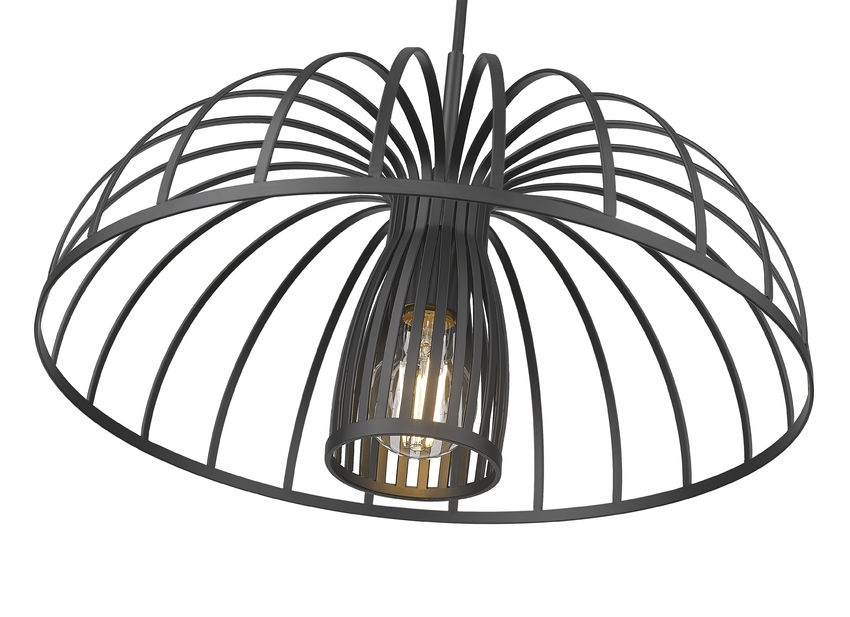
Now imagine the same room with a clean-lined black fixture, an organic sculptural design or a chandelier featuring hand-blown glass.
The furniture hasn’t changed. The walls haven’t changed. The flooring hasn’t changed.
But the visual character of the room can feel remarkably different.
This is why selecting a chandelier involves more than finding something that produces enough light.
You’re choosing a piece of the room’s design.
And unlike many decorative accessories, it’s often positioned directly in the center of your view.
You May Have Inherited Someone Else’s Taste
One of the most common reasons homeowners live with lighting they wouldn’t personally choose is simple:
They didn’t choose it.
When you purchase an existing home, you inherit decisions made by previous owners.
You inherit the cabinets, flooring, paint colors, plumbing fixtures and light fixtures.
Over time, you make the house your own.
You buy furniture you like.
You hang artwork that reflects your personality.
You select colors and materials that feel right to you.
But the chandelier may remain exactly where it was.
It’s easy to overlook because it still works.
Yet the fixture may reflect someone else’s preferences rather than yours.
There’s no requirement to replace it.
But there’s also no reason to assume you have to keep it forever simply because it came with the house.
Your Style Can Change Without Your House Changing
You don’t have to remodel a room to develop different preferences.
Maybe you once loved ornate traditional fixtures and now prefer simpler forms.
Maybe your home has become more eclectic, and you’d enjoy something with more character.
Maybe you’ve discovered a preference for natural materials, textured glass or warmer metal finishes.
Or perhaps your taste has become more traditional over time.
There’s no universally correct direction.
The important question is whether your existing chandelier still represents what you enjoy.
A chandelier doesn’t have to be outdated to stop being your style.
And it doesn’t have to follow the latest trend to be the right choice for your home.
Is Your Chandelier the Right Size for the Room?
Style is personal, but scale is something we can evaluate more objectively.
A chandelier that’s too small can seem visually insignificant in a substantial room.
A fixture that’s too large may dominate the space or interfere with sightlines and movement.
The right proportions depend on several factors:
- Room dimensions
- Ceiling height
- Table size and shape
- Fixture diameter and height
- Mounting location
- Surrounding furniture
- Architectural features
- Sightlines from adjoining spaces
In Southwest Montana, this becomes especially important in homes with tall ceilings, open floor plans, substantial timberwork and large great rooms.
A chandelier that looks substantial in a product photograph may appear surprisingly small once installed in a two-story space.
Conversely, a fixture that looks dramatic in a showroom may overwhelm a modest dining area.
The American Lighting Association provides general chandelier-sizing guidance, but those formulas are starting points rather than universal requirements. Fixture design, furniture proportions and room architecture still matter.
A chandelier should look like it belongs in the space—not like it was selected without considering the space around it.
Look at the Chandelier in Relation to the Table
Dining rooms offer a particularly useful way to evaluate a chandelier because the table provides a clear visual reference.
Stand in the doorway and look at the entire composition.
Does the fixture feel appropriately scaled to the table?
Does it appear centered over the dining area?
Does its shape complement the furniture?
Does it obstruct important views?
Does it provide the kind of illumination you want when you’re actually using the table?
And perhaps most importantly:
Does it look like something you’d choose today?
Don’t judge the chandelier only when it’s illuminated.
Look at it during daylight, too.
A decorative fixture is visible whether it’s switched on or off.
Its shape, materials, finish and visual weight are part of the room throughout the day.
Does the Finish Still Feel Right?
Chandelier finishes contribute significantly to their appearance.
Black, bronze, brass, nickel and other finishes can create very different visual impressions.
But that doesn’t mean every metal finish in the room needs to match.
A chandelier can coordinate with furniture, cabinet hardware, architectural details and other lighting without being identical to them.
What’s more important is whether the combination feels intentional.
A traditional bronze chandelier might look wonderful in an eclectic room with wood furniture and layered materials.
A black contemporary chandelier might complement a room with clean lines and restrained finishes.
A brass fixture might introduce warmth to a space dominated by cooler colors.
None of these is a universal rule.
They’re possibilities worth considering.
What About the Light It Actually Produces?
A chandelier can look beautiful and still provide lighting that doesn’t work particularly well for the room.
Maybe it’s uncomfortably bright.
Maybe the table isn’t illuminated adequately.
Maybe exposed light sources create distracting glare.
Maybe you wish you could dim the fixture.
Maybe the room needs supplemental lighting.
The Illuminating Engineering Society distinguishes between different lighting functions, including general illumination and task lighting. In practice, a dining-room chandelier may contribute to both, but it doesn’t necessarily need to handle every lighting requirement by itself.
Consider whether your chandelier works alongside other light sources, such as sconces, recessed lighting or lamps.
A dimmer can also provide flexibility, provided the fixture, light sources and dimming controls are compatible.
You should enjoy how your chandelier looks and how the room feels when it’s illuminated.
Traditional, Modern, Rustic or Something Else?
Traditional chandeliers
Classic forms, decorative arms, familiar proportions and enduring materials.
Modern chandeliers
Clean lines, simplified silhouettes and contemporary materials.
Rustic chandeliers
Substantial forms and materials that can complement timber, stone and mountain architecture.
Sculptural chandeliers
Expressive shapes that can function as visual focal points even when switched off.
These categories aren’t rigid.
A traditional chandelier can look wonderful in a contemporary home.
A modern fixture can provide an interesting contrast in an older house.
A sculptural fixture can complement a relatively restrained interior.
The objective isn’t to follow a formula.
It’s to find a chandelier that makes sense for the space and the person who lives there.
You Don’t Need to Replace a Chandelier You Love
This is worth emphasizing.
A chandelier can be decades old and still be exactly right.
Maybe it’s beautifully made.
Maybe it has sentimental value.
Maybe its design complements the architecture.
Maybe you selected it years ago and still enjoy looking at it every day.
There’s no reason to replace a fixture simply because newer options exist.
And if the issue is light quality rather than appearance, compatible replacement LED bulbs or appropriate controls may improve the lighting without changing the chandelier itself.
The U.S. Department of Energy explains that LEDs offer high energy efficiency and long service life, although performance and compatibility depend on the specific product and application.
The right decision might be to keep the chandelier.
The point of LOOK UP is to make that decision consciously.
What If You Wouldn’t Choose It Again?
Then you have an opportunity to explore something different.
You don’t need to replace every light in the house.
You don’t need to buy new furniture.
You don’t need to paint the walls.
You don’t need to remodel.
Sometimes a single fixture change can make a meaningful difference to the visual character of a room.
Before selecting a replacement, consider what you actually want to change.
Is the existing fixture too small?
Too ornate?
Too plain?
Too visually heavy?
Not substantial enough?
Does the finish feel wrong?
Does it provide uncomfortable illumination?
Or is it simply not your style?
Understanding what you dislike about the existing fixture can make selecting its replacement much easier.
Bring Us a Picture of Your Chandelier
At Unique Lighting & Home Decor, we help homeowners throughout Butte, Helena, Bozeman, Anaconda, Dillon and Southwest Montana explore lighting options for their homes.
You don’t need to arrive knowing which chandelier you want.
Bring us a photo of the one you have.
If possible, also bring:
- A photo of the entire room
- Ceiling height
- Room dimensions
- Table dimensions, if applicable
- Approximate dimensions of the existing fixture
- Photos of nearby lighting
- Examples of styles you like
- An idea of your budget
We can help you consider fixture scale, style, finish, light output and how a chandelier will relate to the rest of the room.
Whether you prefer traditional elegance, modern simplicity, rustic materials or something more expressive, the goal is to find a fixture that fits your home and your preferences.
LOOK UP. Would You Choose That Chandelier Again Today?
Tonight, when you sit down for dinner, take a moment to look at the chandelier above the table.
Not just the light it produces.
Look at the fixture itself.
Its shape.
Its finish.
Its size.
Its style.
Ask yourself whether it still feels like you.
If it does, wonderful.
If it doesn’t, perhaps it’s time to explore the possibilities.
Your chandelier doesn’t have to be broken to deserve a second look.
LOOK UP. Is that chandelier still your style?
Unique Lighting & Home Decor
926 S. Arizona St.
Butte, MT 59701
406.565.4037
ButteLighting.com
References
Illuminating Engineering Society. (n.d.-a). General lighting. https://ies.org/definitions/general-lighting/ Illuminating Engineering Society
Illuminating Engineering Society. (n.d.-b). Task lighting. https://ies.org/definitions/task-lighting/ Illuminating Engineering Society
U.S. Department of Energy. (n.d.). LED basics. https://www.energy.gov/cmei/ssl/led-basics Department of Energy


Leave a Reply