
Short Answer
If you’ve shopped for replacement light bulbs recently, you’ve probably noticed there are more choices than ever before. While LED lighting has become the standard for most homes, many homeowners still have incandescent, halogen, xenon, compact fluorescent (CFL), or fluorescent bulbs in their fixtures.
Understanding how each technology works, and where each one performs best, can help you choose the right replacement, decide whether to upgrade, and avoid purchasing the wrong bulb.
“I Just Need Another Bulb Like This One.”
It sounds simple.
But when a customer walks into our showroom holding an old bulb, the first question isn’t always “What shape is it?”
It’s often:
“What kind of bulb is this?”
Many homeowners don’t realize their home may contain several different lighting technologies.
Your kitchen might use LEDs.
Your under-cabinet lighting could use xenon.
Your garage may still have fluorescent tubes.
Your dining room chandelier might contain halogen bulbs.
Knowing what you’re replacing is the first step toward choosing the right bulb.
LED (Light Emitting Diode)

LED technology has revolutionized residential lighting.
Instead of producing light by heating a filament, LEDs generate light electronically, making them significantly more energy efficient than older technologies.
Best For
- Nearly every room in the home
- Lamps
- Ceiling fixtures
- Chandeliers
- Recessed lighting
- Outdoor lighting
- Decorative fixtures
- Smart lighting
Advantages
- Excellent energy efficiency
- Long service life
- Available in multiple color temperatures
- High-CRI options
- Dimmable models available
- Motion sensor options
- Dusk-to-dawn models
- Adjustable white
- RGB color-changing options
- Lower heat output
Considerations
- Not every LED bulb is dimmable.
- Some enclosed fixtures require bulbs specifically rated for enclosed use.
- Compatibility with older dimmers may vary.
For most homeowners, LED is now the preferred choice for everyday lighting.
Incandescent Bulbs

Incandescent bulbs illuminated homes for more than 100 years.
They create light by heating a tungsten filament until it glows.
Best For
- Existing fixtures
- Decorative lamps
- Specialty applications
Advantages
- Warm, familiar light
- Outstanding color rendering (CRI near 100)
- Instant-on performance
- Excellent dimming
Considerations
- High energy use
- Significant heat production
- Short service life
Although many general-purpose incandescent bulbs are no longer widely available due to efficiency regulations, specialty versions continue to be manufactured for certain applications.
Halogen Bulbs

Halogen bulbs are an advanced form of incandescent lighting.
They use halogen gas to allow the tungsten filament to operate at higher temperatures.
Best For
- Accent lighting
- Display lighting
- Landscape lighting
- Decorative fixtures
- Specialty lamps
Advantages
- Bright, crisp light
- Excellent color rendering
- Compact size
- Smooth dimming
- Instant full brightness
Considerations
- Very hot operating temperatures
- Higher energy consumption than LEDs
- Shorter lifespan than LED technology
Many homeowners still have halogen bulbs in recessed lighting, decorative fixtures, and accent lighting.
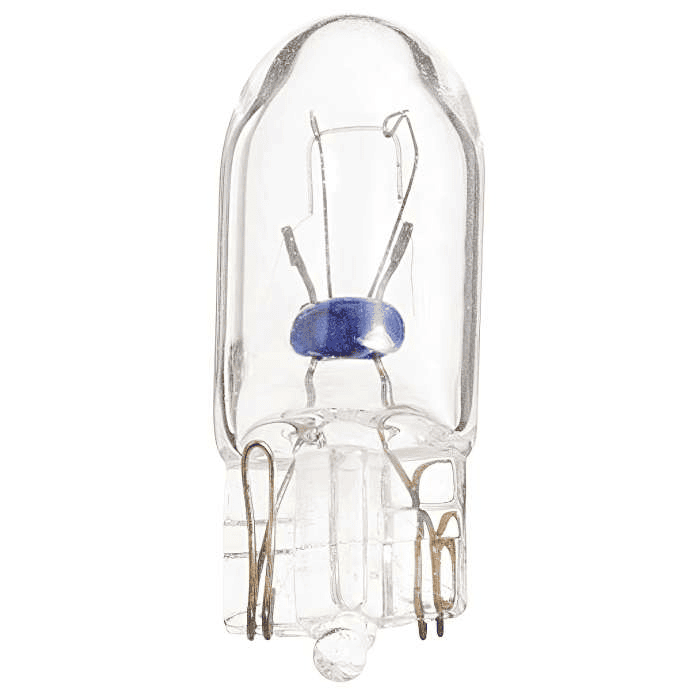
Xenon Bulbs

Xenon lighting isn’t as well known, but it’s still found in many homes.
Xenon bulbs use a tungsten filament surrounded by xenon gas, helping them operate slightly cooler and last longer than traditional halogen bulbs.
Best For
- Under-cabinet lighting
- Display cabinets
- Accent lighting
- Specialty fixtures
Advantages
- Excellent color quality
- Instant-on operation
- Smooth dimming
- Lower operating temperature than halogen
Considerations
- Less common today
- Replacement options are becoming more limited
- LED alternatives may be available for some fixtures
Compact Fluorescent Lamps (CFL)

Remember the spiral bulbs that became popular before LEDs?
Those are Compact Fluorescent Lamps, or CFLs.
They were introduced as an energy-saving alternative to incandescent lighting.
Best For
- Older table lamps
- Ceiling fixtures
- Utility spaces
Advantages
- More energy efficient than incandescent bulbs
- Longer lifespan than incandescent
Considerations
- Require a brief warm-up period
- Contain a small amount of mercury and should be recycled properly
- Not all models are dimmable
- Many homeowners now replace them with LED bulbs
While CFLs helped reduce household energy use, LED technology has surpassed them in efficiency, performance, and convenience.
Fluorescent Tubes

Fluorescent tubes have been used for decades in residential and commercial settings.
They’re commonly found in:
- Garages
- Workshops
- Basements
- Utility rooms
- Laundry areas
- Older kitchens
Advantages
- Efficient for lighting larger spaces
- Wide, even light distribution
- Available in multiple lengths and color temperatures
Considerations
- Some fixtures require ballast maintenance or replacement
- Tubes contain small amounts of mercury
- Performance may decrease in cold temperatures
- Many homeowners are transitioning to LED tube replacements or new LED fixtures
Can I Upgrade to LED?
In many cases, yes.
Incandescent → LED

Usually a simple replacement.
Halogen → LED

Often possible if the LED bulb matches the fixture’s voltage, size, and application.
CFL → LED

Usually an easy upgrade with the correct replacement bulb.
Fluorescent → LED

There are several options:
- Plug-and-play LED tubes that work with compatible ballasts
- Ballast-bypass (direct-wire) LED tubes
- New LED fixtures that replace the entire fluorescent fixture
The best solution depends on your existing fixture and your long-term goals.
Xenon → LED

Some fixtures have compatible LED replacements, while others may require a different approach. Compatibility depends on the fixture design and operating voltage.
Which Technology Produces the Best Color?
When it comes to color accuracy:
- Incandescent — Excellent
- Halogen — Excellent
- Xenon — Excellent
- Premium LED — Excellent (90+ CRI)
- Fluorescent/CFL — Varies by product
Today’s high-quality LED bulbs offer color quality that rivals traditional technologies while using significantly less energy.
Which Lasts the Longest?
In general:
- LED
- Fluorescent
- CFL
- Xenon
- Halogen
- Incandescent
Actual lifespan depends on operating conditions, switching frequency, and product quality.
Which Uses the Least Electricity?
When comparing similar light output:
- LED
- Fluorescent
- CFL
- Xenon
- Halogen
- Incandescent
LED technology delivers the highest efficiency while providing homeowners with the widest variety of features and lighting options.
Which One Should You Choose?
For most homeowners, LED is the best choice for new purchases because it combines:
- Long life
- Energy efficiency
- High-quality light
- Smart features
- Lower maintenance
- Wide variety of styles and applications
However, if you’re maintaining an older fixture, replacing an existing halogen, xenon, or fluorescent bulb may still be the right solution depending on the fixture and your goals.
How Unique Lighting & Home Decor Can Help
Finding the right replacement bulb isn’t always as simple as matching the shape.
We’ll help you identify the technology your fixture uses, explain compatible replacement options, and recommend when upgrading to LED makes sense—and when maintaining your existing system is the better choice.
Whether you’re replacing one specialty bulb or updating lighting throughout your home, we’re here to help.
If You’ve Never Wandered Through Our Showroom, You Should.
Many homeowners are surprised to learn how many different lighting technologies still exist.
Whether you need a hard-to-find xenon bulb, replacement fluorescent tube, decorative halogen lamp, or the latest LED technology, we’ll help you find the right solution.
If you’ve never wandered through our showroom, you should.
Walk-ins are always welcome.
Showroom Hours
Monday–Friday: 9:00 a.m. – 2:00 p.m.
Saturday: 10:00 a.m. – 2:00 p.m.
Visit Unique Lighting & Home Decor
926 S. Arizona St.
Butte, MT 59701
406.565.4037
UniqueLighting@ButteLighting.com
References
Illuminating Engineering Society. (2020). The Lighting Handbook (10th ed.). Illuminating Engineering Society.
U.S. Department of Energy. (2024). LED Lighting. https://www.energy.gov/energysaver/led-lighting
U.S. Environmental Protection Agency. (2024). Cleaning Up a Broken CFL. https://www.epa.gov/cfl
ENERGY STAR. (n.d.). Light Bulbs.


Leave a Reply