
Short Answer
Choosing the right light bulb isn’t just about finding one that fits the socket. The three most important specifications to understand are Kelvins (color temperature), CRI (Color Rendering Index), and Lumens (brightness). Together, these determine how bright your room feels, how accurately colors appear, and whether the space feels warm and inviting or crisp and energetic.
Understanding how these three measurements work together will help you choose lighting that fits your home instead of settling for whatever happens to be on the store shelf.
“Why Doesn’t This New Bulb Look Right?”
Have you ever replaced a burned-out light bulb only to realize something felt off?
Maybe the room suddenly looked too blue.
Maybe it felt darker than before.
Maybe your beautiful wood cabinets looked dull.
Or perhaps the glass shade changed the color of the light more than you expected.
The bulb fit the fixture, but it wasn’t the right bulb for the job.
Choosing a light bulb today is about much more than wattage. It’s about selecting the right combination of Kelvins, CRI, and Lumens for the fixture, the room, and how you use the space.
The Three Numbers That Matter
Kelvins (K): The Mood of the Room
Kelvin measures the color of the light.
Think of it as the room’s personality.
- 2200K – Very warm, amber light similar to candlelight. Great for decorative fixtures, patios, and cozy spaces.
- 2700K – Warm white. A favorite for living rooms, bedrooms, dining rooms, and many traditional homes.
- 3000K – Warm with a cleaner appearance. Popular in kitchens, bathrooms, laundry rooms, and open-concept homes.
- 4000K – Bright neutral white. Often used in garages, workshops, utility rooms, and task-oriented spaces.
- 5000K – Daylight. Excellent for workshops or detailed tasks but often too cool for most living areas.
A higher Kelvin number does not mean a brighter bulb; it simply changes the color of the light.
CRI: How Good Colors Look
CRI stands for Color Rendering Index.
This tells you how accurately colors appear under the light.
Think about:
- Paint colors
- Hardwood floors
- Kitchen countertops
- Family photos
- Artwork
- Food
- Skin tones
A bulb with a higher CRI generally allows these colors to appear more natural.
As a general guideline:
- 80 CRI – Acceptable for many everyday applications.
- 90+ CRI – Excellent for most homes and areas where color quality matters.
If you’ve invested in beautiful finishes throughout your home, a high-CRI bulb helps you enjoy them the way they were intended to look.
Lumens: The Brightness
Forget watts.
Watts measure energy use.
Lumens measure how much light a bulb produces.
As a general reference:
- About 450 lumens – Similar to a traditional 40-watt incandescent.
- About 800 lumens – Similar to a traditional 60-watt incandescent.
- About 1,100 lumens – Similar to a traditional 75-watt incandescent.
- About 1,600 lumens – Similar to a traditional 100-watt incandescent.
The right brightness depends on the room, the fixture, and how many light sources are in the space.
Why the Fixture Itself Matters
One of the biggest mistakes homeowners make is choosing a bulb without considering the fixture.
The fixture can dramatically change how the light looks.
Clear Glass Fixtures
Clear glass allows you to see the bulb directly.
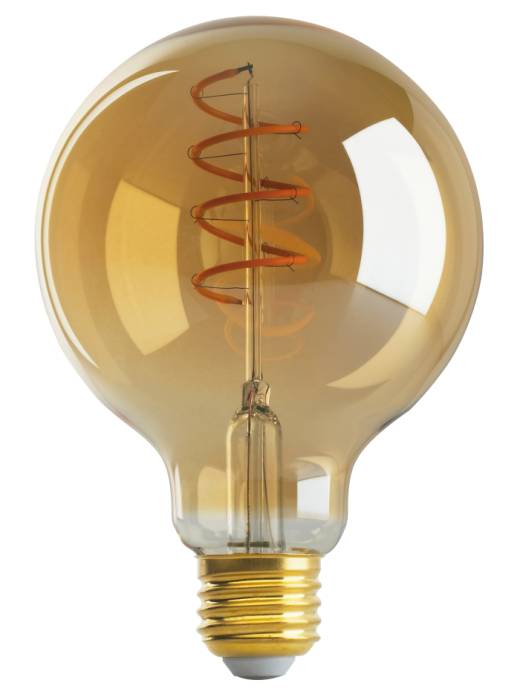
This makes decorative bulbs like Edison-style LEDs an excellent choice.
Because the bulb is visible, appearance matters just as much as performance.
Frosted or White Glass
Frosted glass softens the light.
It helps reduce glare and spreads illumination more evenly.
These fixtures often don’t require decorative bulbs because the bulb itself is hidden.
Seeded Glass
Seeded glass adds texture and character.
It can slightly diffuse the light and create interesting patterns while still allowing decorative bulbs to remain visible.
Amber or Smoked Glass
Tinted glass changes the appearance of the light.
An amber shade naturally warms the light, even when using the same bulb.
A smoked or darker glass shade can reduce the amount of light that reaches the room, so you may benefit from choosing a bulb with higher lumen output while staying within the fixture’s rated limits.
Match the Bulb to the Job
Living Rooms
- 2700K
- 90+ CRI
- Moderate lumen output
The goal is comfort and relaxation.
Kitchens
- 3000K
- 90+ CRI
- Higher lumen output
High-quality color rendering helps food, countertops, and cabinetry look their best while providing ample light for meal preparation.
Bathrooms
- 3000K
- 90+ CRI
- Bright enough for grooming
Accurate color rendering is especially important around mirrors.
Bedrooms
- 2700K
- Moderate brightness
- High CRI
Warm lighting creates a relaxing atmosphere at the end of the day.
Garages & Workshops
- 4000K–5000K
- High lumen output
- Good CRI
Task lighting benefits from brighter, cooler light that improves visibility.
Outdoor Decorative Fixtures
Choose a color temperature that complements your home’s architecture and neighborhood while considering how the glass enclosure affects the final appearance.
Warm white (around 2700K) is a popular choice for welcoming entryways and outdoor living spaces.
Don’t Forget About Dimmers
Not every LED bulb is dimmable.
If your fixture uses a dimmer switch, be sure to choose a bulb specifically labeled as dimmable and, when possible, pair it with an LED-compatible dimmer. Using incompatible products can result in flickering, limited dimming range, or inconsistent performance.
When Brighter Isn’t Better
One of the biggest misconceptions is that the brightest bulb is always the best choice.
Too many lumens in a small fixture can create uncomfortable glare.
Too few lumens can leave a room feeling dim and uninviting.
The best lighting comes from balancing brightness with color temperature, color quality, fixture design, and how the room is used.
How Unique Lighting & Home Decor Can Help
Choosing the right bulb shouldn’t require guesswork.
Our team helps homeowners compare color temperatures, understand CRI, select appropriate brightness, and find bulbs that complement both their fixtures and the way they use each room. Whether you’re replacing one specialty bulb or updating lighting throughout your home, we’ll help you choose products that deliver the look and performance you’re after.
Bring in your old bulb, a photo of your fixture, or even just your questions—we’re happy to help.
If You’ve Never Wandered Through Our Showroom, You Should.
There are some things that are difficult to judge from a package or a website.
The warmth of a 2700K bulb.
The crisp appearance of 3000K.
The difference between an 80 CRI and a 90+ CRI light source.
The way clear, frosted, or amber glass changes the light.
These are things you can experience in person.
If you’ve never wandered through our showroom, you should.
Walk-ins are welcome.
Showroom Hours
Monday–Friday: 9:00 a.m. – 2:00 p.m.
Saturday: 10:00 a.m. – 2:00 p.m.
Visit Unique Lighting & Home Decor
926 S. Arizona St.
Butte, MT 59701
406.565.4037


Leave a Reply