
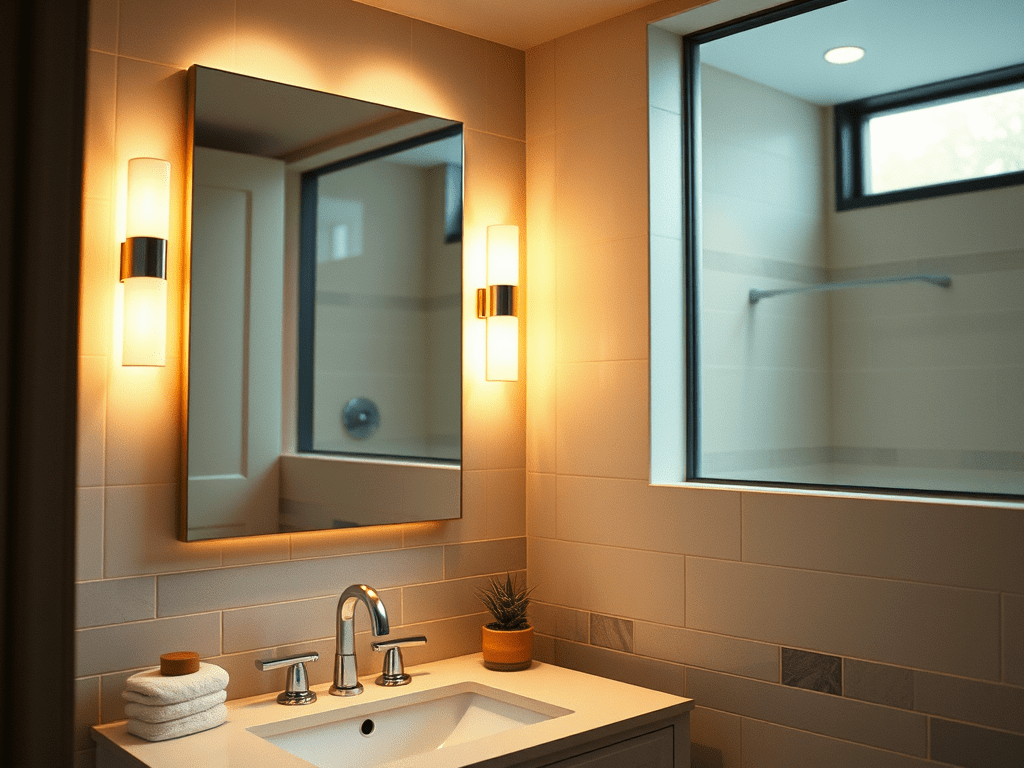
Bathrooms are deceptively difficult to light well.
They look simple on a blueprint:
- vanity
- shower
- toilet
- ceiling light
But in real life they demand precision because they combine task accuracy, reflection, moisture, and nighttime comfort.
That makes them one of the most common sources of lighting dissatisfaction after move-in.
The Vanity Problem
The most common mistake is relying on overhead light alone.
Overhead light creates downward shadows across:
- eyes
- cheeks
- jawline
This affects:
- shaving
- makeup
- grooming
- mirror comfort
The issue is not brightness; it is direction.
Side lighting or balanced vertical lighting reduces facial shadow dramatically.
Why Mirror Width Matters
Fixture width must relate to mirror width.
If the fixture is too narrow:
- face edges fall dark
If too wide:
- brightness spills unevenly
Vanity lighting must scale proportionally.
This is often overlooked when fixtures are selected for style before mirror size is final.
Nighttime Bathroom Use Is Different From Morning Use
Bathrooms are one of the few rooms regularly used under opposite biological conditions:
Morning:
- alertness
- higher brightness tolerance
Night:
- dark-adapted eyes
- low glare tolerance
Without dimming, nighttime bathroom lighting often feels unnecessarily harsh.
That is why bathrooms benefit from layered control more than many people expect.
Showers Need Thought Too
A single shower light often creates uneven brightness because walls interrupt beam spread.
Tile reflectance also changes glare dramatically.
Lighter tile amplifies brightness. Dark tile absorbs it.
Fixture placement must anticipate finish materials.
Bathrooms seem simple because they are compact.
In reality, their lighting performance is highly sensitive to small mistakes.
And small mistakes in bathrooms are noticed every day.


Leave a Reply