
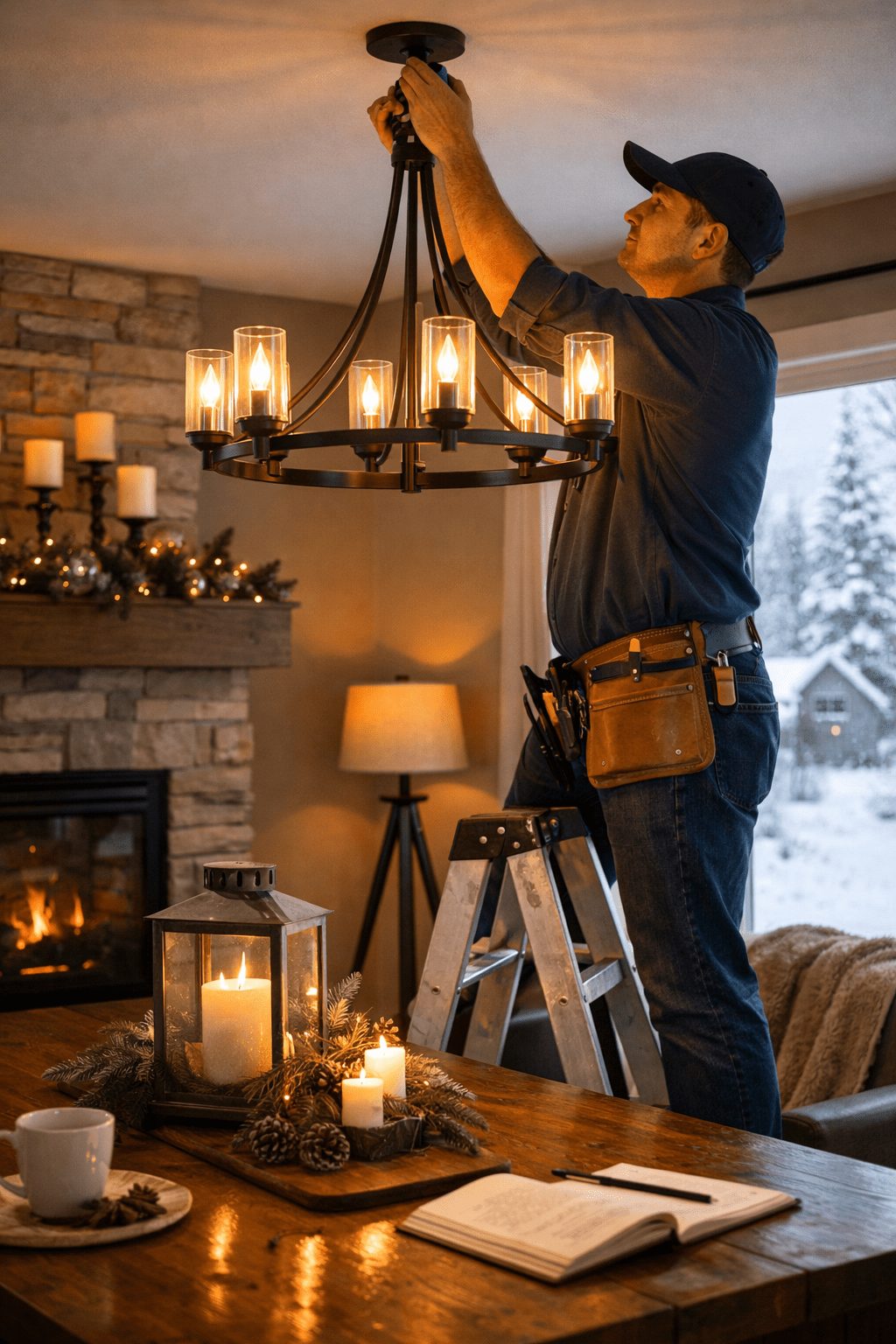
If you find yourself looking at your lights and wondering why a room feels flat, harsh, or oddly shadowed once night falls, you’ve entered the most important stage of lighting decisions: noticing the problem, not the product. This moment usually sends homeowners straight to Google, typing things like “lighting trends 2026,” “how to choose lighting for evening comfort,” “best Kelvin for living rooms,” or “why do my LEDs glare at night?” Long before someone searches for a fixture by name, they’re searching for clarity, confidence, and someone with enough authority to settle the guesswork.
In Montana homes, lighting decisions feel more personal because the spaces themselves are more personal. Homes aren’t showroom-perfect, ceilings aren’t always standard, finishes lean natural instead of glossy, and winter nights reveal lighting flaws faster than any trend cycle ever could. The best lighting upgrades happen when timing gives you the honesty of real conditions, the flexibility of open installer schedules, and the breathing room to make decisions that serve the home, not just the aesthetic.
The Seasonal Cycle of Lighting Awareness
Lighting dissatisfaction is most noticeable in winter. When darkness arrives at 4 PM, glare sharpens, shadows stretch, and bulbs that are too cool or too dim expose themselves instantly. Winter pushes lighting searches into hyperdrive, especially around warm glass, aged metals, layered LEDs, and fixtures that don’t blind you once night takes over a room. It’s also the season when contractor schedules loosen after holiday installs, giving homeowners a calmer runway to replace interior fixtures without competing against peak daylight projects.
Spring remains the most popular renovation season, driven by home-value searches and refresh budgets. The difference in 2026 is that homeowners who plan their fixture swaps in winter walk into spring installs already knowing the correct scale, temperature zones, and control integration, avoiding rushed decisions when contractors are booked solid.
Summer is the ideal time for exterior fixture replacement. Temperature swings, finish resilience, and damp-rated glass engineering can be judged honestly in natural evening light. Interior fixtures replaced in summer perform best when winter planning has already locked in junction box support, LED safety, dimmer compatibility, and fixture height ranges that fit the architecture—not the photo you saved online.
Fall becomes the second-best awareness season. Gatherings move indoors, night arrives earlier, and searches trend toward dining chandeliers, clear glass, warm metals, and lantern profiles that anchor a table or an entryway without glare.
Timing Removes Compromise
In 2026, the advantage belongs to fixture replacement that starts early enough to confirm infrastructure, not decorative impulse. Installers treat rough-in order as non-negotiable, especially in remodels where walls, ceilings, and finishes may still shift. The advice feels obvious only after a homeowner lives through a fixture that buzzes, blinds, or hangs awkwardly against a final finish. The seasonal sweet spot for replacement follows a pattern because lighting flaws always surface the same way: darkness first, questions second, solutions third.
That pattern looks like: notice in winter → plan with confidence → install without compromise.
Lighting Zones & Temperatures That Win in 2026
Warm lighting continues to lead evening-comfort searches. Ranges between 2700K–3000K remain top recommendations for spaces meant to feel cozy, including living rooms, dining areas, and bedrooms. Cool lighting between 3500K–5000K performs best in task zones—undercabinets, toe-kicks, garages, and home offices—because it increases visibility without flattening natural finishes or overheating LED enclosures. The 2026 edge belongs to homes that layer both temperatures intentionally, giving contrast without glare, mood without muddiness, and brightness without harshness.
Glass profiles are also seeing a shift. Clear and lightly smoked glass is outperforming frosted glass in 2026 searches because it allows bulb flexibility and warmth control at night. Lantern profiles, especially in aged copper or brass, trend stronger because they complement Montana’s natural materials like stone, plaster, and tile instead of competing with them.
Finishes & Silhouettes That Age Forward, Not Out
What feels dated in 2026 isn’t a specific fixture—it’s a timing mistake. Trend-volume fixtures burn out fast when chosen in isolation. What stays relevant are fixtures built around geometry, durable metals, glare-free shade profiles, and finish integrity that doesn’t tarnish prematurely in cold climates. The silhouettes winning 2026 searches are clean, scaled correctly, glass-forward, and proportional to the room behavior they’re lighting—not the photo that inspired them.
Budget Planning & Installer Logic That Wins in 2026
People increasingly ask “How much does it cost to hire a lighting expert?” because budgets are tight, but regret is expensive. The smartest 2026 lighting plans are starting in the season when lights are used most and contractors are booked least. It allows a Lighting Stylist to balance:
- real chandelier scale to furniture, not photos,
- bulb brightness by lumens per square foot, not watts,
- temperature zoning by room behavior, not trend,
- and control integration early, not rushed after finish.
At Unique Lighting and Home Decor, we offer professional lighting consultations at no cost. Simply request an appointment here.
A Smarter Way to Light Your Home in 2026
Unique Lighting & Home Decor carries brands that age forward, not out, because Montana homes demand lighting that installs cleanly, scales correctly, layers temperatures safely, and performs at night without glare. Their history in Butte’s switch from gas lighting to copper-wired electric infrastructure reinforces a legacy that lighting is situational, architectural, and personal, not templated.


Leave a Reply