

The Rules Most People Miss (and the One That Matters Most)
Choosing a light fixture should be simple. Yet it’s one of the most second-guessed decisions people make in their homes.
You can spend hours scrolling through beautiful images, save dozens of options, and still feel unsure once it’s time to buy. That hesitation usually comes from one thing: most lighting advice focuses on style first, when the real decision starts elsewhere.
Let’s break down the questions people actually ask—and the rules that help answer them.
How Do I Know What Light Fixture to Buy?

Appalachian – 4 Light – 57 inch – Antique Copper – Stem Hung – Island Light
The honest answer: you don’t start with the fixture. The right light fixture is a response to the space, not a standalone decision. Before choosing anything, ask:
- What happens in this room?
- Is this space used more during the day or at night?
- Do people gather here, pass through it, or work in it?
- What already exists that the light needs to support?
A fixture should solve a problem—visibility, warmth, balance, scale—not just “look nice.”
When a fixture feels wrong after installation, it’s usually because it was chosen in isolation, without considering placement, light temperature, or how the room is actually used.
What Is the Rule of Thumb for Light Fixtures?
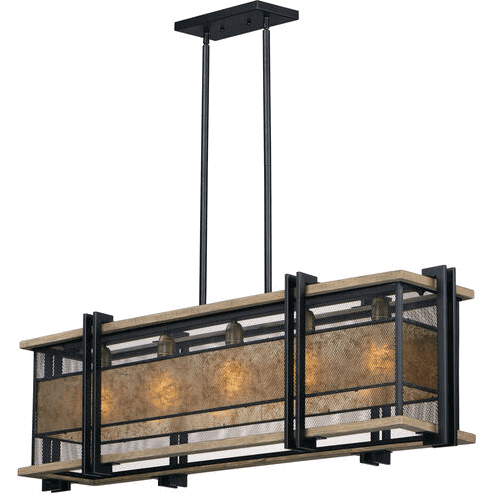
Boundry 45″ 5-Light Linear Pendant – Black, Barn Wood & Antique Brass Finish
There are a few guidelines that consistently prevent regret.
Scale matters more than style.
A fixture that’s too small disappears. One that’s too large overwhelms the room. As a general rule, fixtures should feel proportional to the furniture and architecture—not the photo you saw online.
Height changes everything.
A pendant or chandelier hung even a few inches too high or too low can feel awkward. Dining lights, island pendants, and entry fixtures all have different ideal hanging ranges.
Light should layer, not compete.
One overhead fixture rarely does all the work. Most rooms feel better when lighting is layered—ambient light for the room, task light where work happens, and accent light for depth.
Rules of thumb exist to prevent extremes, but they’re starting points, not final answers. If you are still unsure or afraid to make the wrong choice, book a free one on one consultation with our expert.
What Is the Golden Rule of Lighting?

Horizon 12″ LED Flush Mount Ceiling Light – Oil Burnished Bronze by Vaxcel
The golden rule is simple—and often ignored:
Lighting should support how you live, not how a room is styled.
A beautiful fixture that creates glare at night isn’t successful lighting. Neither is a trendy piece that makes a room feel cold or flat once the sun goes down.
Good lighting:
- feels comfortable without being noticed
- works at different times of day
- flatters people, materials, and spaces
- adapts to real life, not staged photos
If lighting draws attention to itself for the wrong reasons, something is off.
What Light Fixtures Are Out of Style?
Bryant 3-Light Vanity Light – Chrome with Clear Seedy Glass

This is where people get nervous—but the truth is reassuring.
Fixtures don’t go out of style as quickly as bad lighting decisions do.
What tends to feel dated:
- fixtures chosen only because they were trendy
- overly ornate pieces that fight the architecture
- ultra-cool lighting used everywhere
- fixtures that don’t fit the scale of the space
What stays relevant:
- simple forms with thoughtful proportions
- materials that age well
- fixtures that allow flexibility in bulb choice
- lighting that works with the home’s character
Timeless lighting isn’t about playing it safe. It’s about choosing pieces that make sense for the space they’re in. Our expert lighting consultant can help search and identify the perfect, timeless fixtures for your space.
The Real Answer Most Advice Skips

Pro Plus 104 Indoor Ceiling Fan – 52″
Most people don’t struggle because they lack taste. They struggle because lighting decisions are often made without context.
A fixture that looks perfect in one home can feel completely wrong in another. That doesn’t mean the fixture is bad—it means lighting is personal, architectural, and situational.
The best lighting choices come from understanding:
- the space
- the people who live there
- how light behaves at different times
- and how warmth, brightness, and placement work together
When those things are considered first, the “right” fixture usually becomes obvious.
Final Thought
If you’re stuck between options, it’s not because you’re indecisive—it’s because lighting isn’t meant to be chosen alone, out of context, or rushed.
The goal isn’t to buy the perfect fixture.
It’s to create a space that feels right once the lights are on.
And when that happens, the fixture choice rarely feels like a gamble.


Leave a Reply