

When the autumn wind whistles down Granite Street and the lamps outside the Silver Bow County Courthouse flicker, some say it isn’t the wind at all — it’s the footsteps of Miles Fuller, the condemned man who never stopped pacing.
Fuller’s ghost has been part of Butte’s haunted folklore for more than a century. His story blends true crime, tragedy, and the eerie beauty of a city that still carries the echoes of its own history in the dark.
A City of Shadows and Judgment
In the early 1900s, Butte stood at the height of its power — a mining empire glowing with copper wealth and gaslight. But beneath the prosperity ran a current of vice, violence, and poverty. The Silver Bow County Courthouse was both a beacon of order and a stage for human downfall.
In 1906, that stage held Miles Fuller, a man convicted of a brutal murder. The exact details have blurred with time, but according to the Verdigris Project’s historical account (2022), Fuller was sentenced to hang in the county gallows housed inside the original courthouse structure. His death was swift, but his presence, locals claim, was not.
The Footsteps That Wouldn’t Fade
Over the decades that followed, courthouse workers began to report strange occurrences. After hours, when the echo of footsteps should have faded, a steady, rhythmic pacing could be heard from the upper halls.
Night janitors spoke of creaks and cold drafts sweeping through locked corridors. Security officers described hearing measured footsteps tracing invisible routes — following the exact floor plan of the old 1906 courthouse, even though the building had long been remodeled (Verdigris Project, 2022).
One maintenance worker recounted walking through a dimly lit stairwell when he felt a sudden cold pressure at his back — “like someone passing through me,” he later said. When he turned, he saw a faint outline of a man in a suit and bowler hat. The light overhead flickered once, and the figure was gone.
Lighting of the Gallows Age
To understand why this story endures, you must picture the light of that era.
The courthouse in 1906 was illuminated by early gas lamps and first-generation incandescent bulbs — warm, unstable light that quivered and buzzed. Each fixture cast deep pools of illumination surrounded by dense shadow.
The hanging chamber itself would have been lit by a single, high-mounted lamp, its glow uneven and theatrical. In such a space, the line between light and darkness blurred — a perfect canvas for fear, imagination, or perhaps something else.
Even a flicker in a hallway bulb could evoke the sensation of a spirit moving past. In Butte’s dry, high-altitude air, the slightest draft could make the flame bend — and a condemned man’s shadow might seem to rise again.
A Modern Encounter
In 2018, a courthouse staff member stayed late one October evening. Alone, she worked beneath the sterile hum of modern LED panels — nothing like the trembling lamps of Fuller’s day. Yet, as she finished filing case records, she heard the unmistakable sound of footsteps descending the old west corridor.
She assumed it was maintenance until she realized each step matched the pace of a human heartbeat — slow, steady, deliberate. When she looked up, a motion sensor light flicked on down the hall. There was no one there.
The next morning, she returned to find her desk lamp had burned out. A small scorch mark traced the inside of the bulb — not shattered, but blackened in the shape of a shoeprint.
To this day, she swears that the hallway lights dimmed the moment she whispered his name.
Light as Memory
The story of Miles Fuller reminds us that light isn’t just illumination — it’s memory.
Each generation of lighting carries its own spirit:
- The gas lamps of the early 1900s glowed with the restless energy of an industrial age.
- The incandescent bulbs that followed hummed with promise and modernity.
- Today, we rely on layered LED lighting — precise, efficient, and controlled — yet still capable of creating mood, mystery, and emotion.
Just as Fuller’s steps trace the outline of a courthouse that no longer exists, our homes carry echoes of earlier light — the amber tones, the flicker, the warmth of human presence in the dark.
At Unique Lighting and Home Décor, we believe lighting can tell stories — of heritage, of time, and of the unseen connections between past and present.
A Question That Still Walks
Each Halloween, visitors still report hearing faint footsteps near the courthouse’s upper landing. Some say the sound stops if you turn on a light; others say it grows louder, closer — as though the ghost is drawn to the glow.
So if you ever pass the Silver Bow County Courthouse after sunset, pause and listen.
If you hear someone pacing behind you — measured and steady — don’t be afraid.
He’s just walking home.
Lighting Tip: Recreating the Era’s Glow
If this story inspires your own home’s Halloween ambiance:
- Use 2200–2700K warm LED bulbs to mimic the hue of early electric lamps.
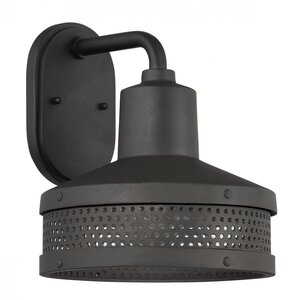
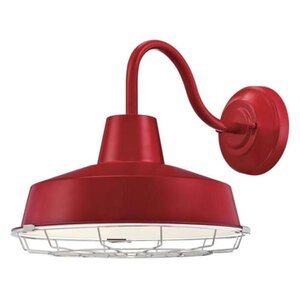
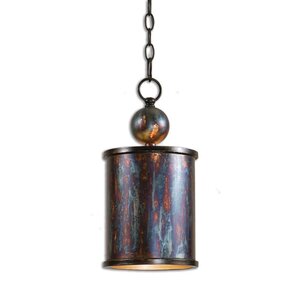
- Add vintage filament-style pendants or sconce fixtures with dimmers to create an old-world atmosphere.
- Combine warm accent lighting with deep shadow to evoke historical depth without sacrificing comfort.
Lighting isn’t only about visibility — it’s about storytelling.
References (APA 7th Edition)
Verdigris Project. (2022, October 30). Butte America’s Story, Episode 37: Miles Fuller. Retrieved from https://www.verdigrisproject.org/butte-americas-story-blog/butte-americas-story-episode-37-miles-fuller
Butte-Silver Bow Archives. (2023). Historical records: Silver Bow County Courthouse architecture and executions, 1900–1910. Butte, MT: Local Records Collection.


Leave a Reply